Showing posts with label testing. Show all posts

Thursday, July 02, 2015

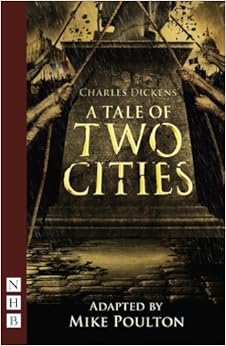
A Tale of Two Cities - ISTE & School

 "It was the best of times, it was the worst of times,
it was the age of wisdom,
it was the age of foolishness . . ." - Charles Dickens

  This week I feel as if I have had my feet in two different worlds. I have been attending ISTE via Twitter and the Google+ NOT AT ETC community.  I've also been providing instructional technology support to reading remediation camps.
 
Remediation camp is for students who didn't score high enough on their end of grade tests or their end of year reading assessments. By state law the school district must provide the option for students to attend a camp with reading instruction. Unfortunately on some levels the camp feels like punishment. The lessons are tightly scripted and leave little room for student or teacher creativity. Students are assessed repeatedly during the short camp and then retake a paper and pencil test on the last day.
 
At ISTE, educators are talking about teacher collaboration, the maker movement and differentiated instruction. In camp, students are completing worksheets and receiving the same instruction regardless of their instructional needs. There was pressure to provide cookie cutter, sage-on-the-stage style instruction. Some of the teachers bucked the system and provided innovative, creative instruction that empowered and engaged students, but we need much more of that!
 
As Scott McCleod said, "the work of transforming school systems is slow work." I couldn't agree more, Scott. Education is a tale of two cities. We are at once in the age of wisdom and the age of foolishness. We have to keep pushing to get the foolishness out of our schools and implement best practices everywhere!

Thursday, April 12, 2007

Paying Teachers the Right Way

The Center for Teaching Quality has released a detailed recommendation for reforming teacher pay, Performance Pay for Teachers. I think they are on the right track.

The authors of the report are 18 teachers from across the country with amazing credentials. They recommend a base pay system with three tiers – novice, professional and expert. Teachers who show above average performance in increasing student performance or leadership within their school would receive additional compensation. There are also incentives for qualified teachers choosing high-need, low-performing schools.

The report recommends measuring student performance through a combination of standardized tests and classroom assessments. It also focuses attention on the growth of students during the school year, not just their performance level at the end of the year like NCLB. I believe this would encourage teachers to help all students, not just those marginally below the grade level standard.

They also addressed my other pet peeve of educational compensation - seniority pay. They argue that teachers should be rewarded for demonstrating leadership not just seniority. Absolutely!

In a time when most of the rhetoric about education and performance measurement systems is focused on what is not working, this report has a refreshingly positive focus. I hope my state of North Carolina, where the Center for Teacher Quality is based, will adopt a teacher compensation system of this type.


Tuesday, March 27, 2007

Losing Faith


"I've always been a supporter of public school."

That's me. I believe in the dream of public school. I have always enjoyed working with a melting pot of students, including those who don't have all the advantages that society can offer. I still carry the name of a student that I almost ten years ago.

He was hanging around late after school one day. I had him one period a day and I had only been at the school for about a month, so I didn't really know him. But I knew that school, at least my class, wasn't a big priority for him. I wanted him to know that I cared and maybe that would motivate him to care about school.

We've all heard the stories and seen the movies of inspirational teachers working in an inner city school who turn kids around. So, I asked him if he needed a ride home. He said, "Yeah." So we set out across town and he hopped out of the car in front of a non-descript apartment building. I looked up his mom's phone number the next day and wrote it on a note card next to his name. I tried to call her but only got a machine. I told my mentor about it the next day and she cautioned that it wasn't a very smart move on my part. I knew that, but wanted to take the risk - in hopes of a big payoff. The payoff never came.

That is the end of the story. He wasn't in school the rest of the year. I found out that he got in trouble and was possible being put in "lock up," juvenile detention. He didn't come back the next year either, but I still carry around that postcard in my briefcase. It reminds me that I believe in the power of public education and a caring teacher to save a struggling kid.

So why have my wistful thoughts of education turned to private schools? In conversations with teacher friends over the last two days we have bemoaned the national focus on testing. In the school system where my kids attend teachers are given a pacing guide which tells them exactly what to teach on each day of the school year. Now if that won't suck the creativity out of teaching, I don't know what will. We have shared stories of teachers unwilling to challenge students with creative and innovative assignments. Schools, some of the best in the public school system, where students only use technology once a week. Where teachers have third graders coloring hand-written brochures instead of designing them in Word or Publishers.

Then come the stories of private schools where teachers are freed from the bonds of testing. Where class sizes are small and innovation is encouraged. Teachers challenge their students to create real content, connect to the world outside the classroom and apply technology in meaningful ways. Doesn't it sound good?!

I don't want to give up on public education, but I need to see there is hope. Show me that the accountability pendulum is beginning to swing the other way. Point out examples of great innovation and stellar teaching. If you see hopeful signs, please share them. If you have ideas for how to shift the thinking of the education establishment, please tell me. I want to keep my faith alive.

"After view of my classroom" image by LizMarie
http://www.flickr.com/photos/perspicacious/303144538/

Technorati Tags:

Sunday, November 26, 2006

Pay for Performance

In Performance Pays (Technology & Learning, November 2006) Lindsay Oishi reports on Denver Public Schools “groundbreaking teacher pay for performance system.” Their system four parts – knowledge and skills, professional evaluation, market incentives, and student growth. I was so delighted to hear about a public school system with a balanced merit pay system. When I first started working as a teacher in 1996 after spending six years in industry I was flabbergasted by the pay system. I was evaluated by my supervisor, but it didn’t really matter. It had no effect on my pay.

I was paid the on the same pay scale as every other teacher in a NC public school, based only on years of experience and advanced degrees. Richard* taught math the same way he had taught it for the last 20 years. He lectured and gave problems from the book. He bemoaned the change in “population” at the school and wished for the good ole’ days when the kids were better behaved. He grumbled about attending staff development and you had better not get between him and the door at the end of the school day. Charlie* had been teaching for a number of years too. But he wasn’t counting the days until retirement. He started a new class teaching kids how to do desktop publishing, after he took a course at the local community college on it himself. Although he was not formally mentoring any new teachers he willing spent time with them to offer advice. He was at school all hours, knew the kids and could talk their language. They were both getting the same salary, but everyone knew they weren’t doing the same job.

To bring about the next revolution in education we need to reinvent the compensation system. Teachers who are getting it done need to be rewarded. And it shouldn’t just be based on the results of high stakes testing. It must be a multi-faceted measurement system. I think Denver has the right idea. You can read more about Denver’s program at Dept. of Ed.

*fictitious names

Technorati Tags: